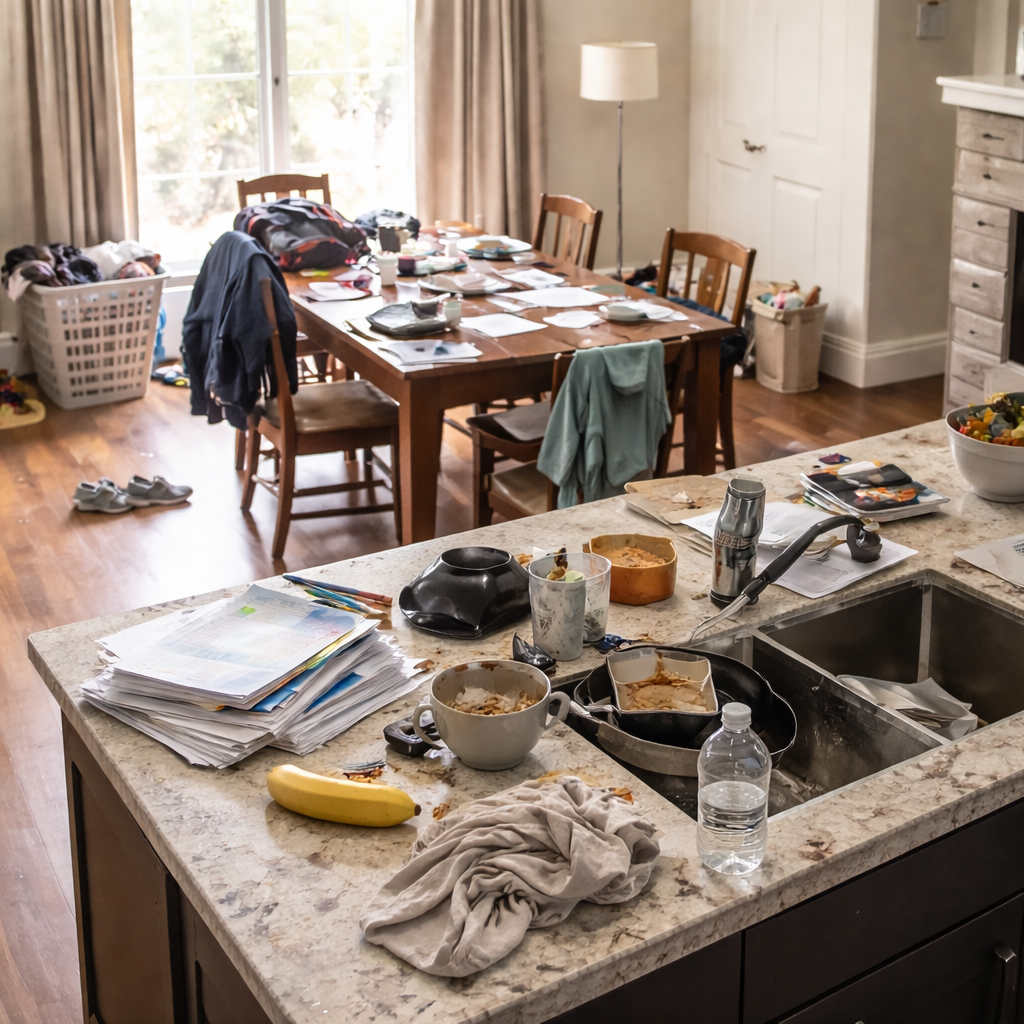
Feeling overwhelmed at home usually has nothing to do with being lazy or unmotivated.
It happens when too many small things pile up and there’s no clear place to start. The house feels loud even when it’s quiet. Every room feels like a problem. And the idea of “getting organized” sounds exhausting instead of helpful.
Where to Start When You’re Overwhelmed at Home
Here’s the truth most people don’t say out loud:
You don’t need to fix your whole house.
You need to fix one thing.
And not the “most important” thing.
The most irritating one.
Read that again. Let it sink in.
Why Trying to Fix Everything Never Works
When the house feels out of control, your instinct is usually to want a full reset. Whole-house declutter. Weekend clean-out. New system everywhere. – Exhausting AND overwhelming!
That plan almost always fails.
Not because it’s a bad idea, but because overwhelm doesn’t come from the size of the mess. It comes from daily friction.
Daily friction is the thing that:
- Trips you up every morning
- Makes you sigh every time you walk past it
- Gets cleaned, then messy again, over and over
Until that one problem is handled, nothing else sticks.
Find the One Mess That’s Stealing Your Sanity
Forget what “should” be tackled first.
Don’t start with what looks the worst or what guests would see.
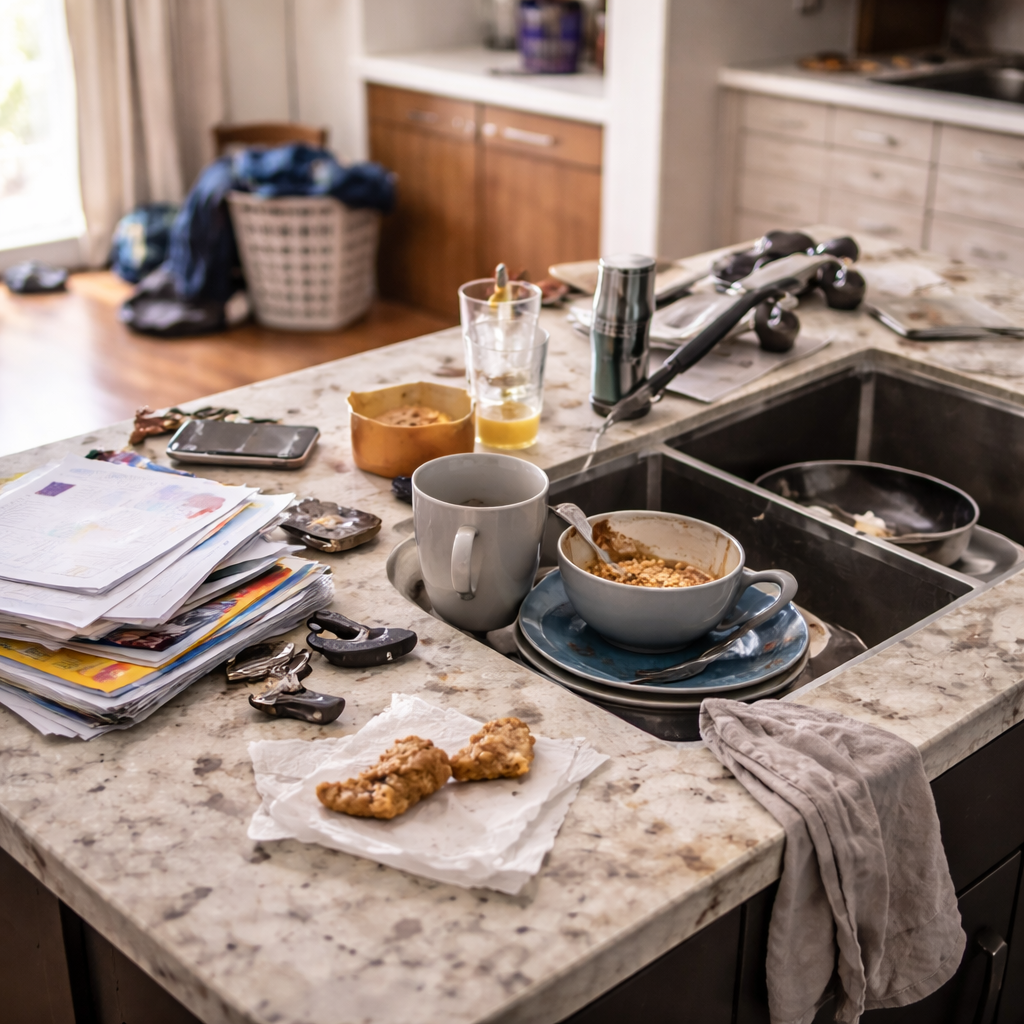
Start with the mess that bothers you every single day.
For a lot of households, it’s one of these:
- The kitchen counter that’s never cleared off
- The dining table that somehow became a dumping ground
- The entryway pile of bags, shoes, and papers
- The bathroom sink explosion
- The paper pile that keeps moving but never disappears
Here’s the simple test:
If it annoys you daily, it’s the right place to start.
Fixing that one spot creates instant relief, even if the rest of the house stays the same.
Fix It Fast, Not Perfect
This is not the moment for labels, bins, or buying new containers.
The goal is relief, not a magazine spread.
Use this simple reset:
First, get rid of anything that doesn’t belong there.
Put it where it actually goes or set it aside for later. No sorting rabbit holes.
Second, decide what does go there.
Be honest. If something always lands there, pretending it doesn’t belong won’t work.
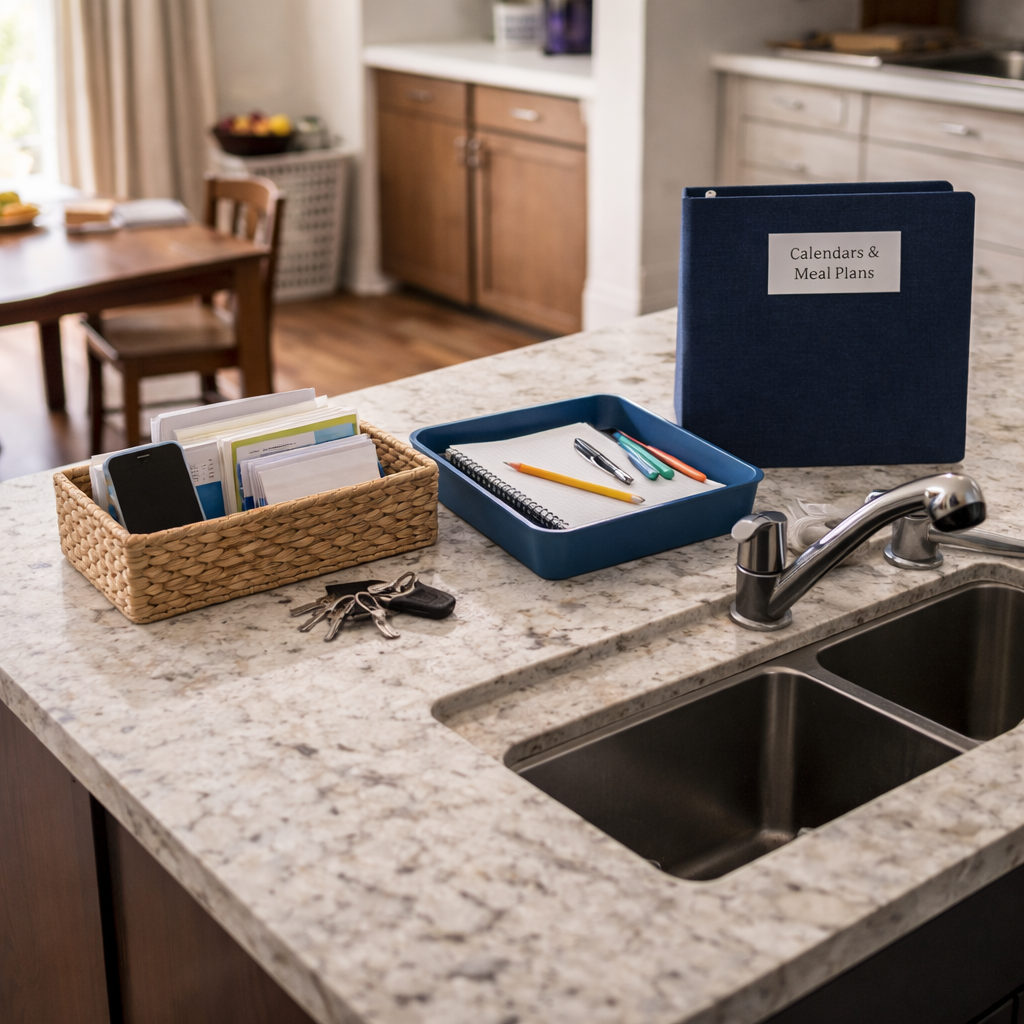
Third, contain it in the simplest way possible.
A basket. A tray. A folder. Something boring that works.
If it takes more than a few minutes to put things away later, the setup is too complicated.
Simple wins here.
When Decision Fatigue Is the Real Problem
Sometimes the mess isn’t the issue. The thinking about it is.
If every decision feels heavy and just getting started feels impossible, a short reset with clear steps helps more than another article or checklist.
That’s where the 3-Day Decluttering Jumpstart fits in.
It breaks decluttering into small, focused chunks over three days, so there’s no wondering what to do next or where to begin. It’s designed to create momentum without turning it into a full-blown project.
Short. Clear. Done before burnout kicks in.
Why Paper Still Creates Chaos (Even in Organized Homes)
Paper chaos doesn’t usually come from receipts and junk.
It comes from active paper.
The kind that’s meant to be used:
- Meal plans
- Calendars
- Schedules
- Checklists
- Notes you actually need
- Printables that were downloaded with good intentions
When those papers don’t have a working home, they drift.
They end up stacked on counters, half-used on the table, or shoved into piles because there’s no clear place to use them.
That’s where the Build-A-Binder Starter Kit comes in.
It’s not for storing random papers.
It’s for organizing the things you’re actively using to run your home.
Meals. Plans. Routines. Lists.
Instead of papers floating around in different spots, everything lives in one binder that’s meant to be opened, referenced, and used daily.
And it’s already loaded with a starting bundle of 10 practical pages to help you get organized. Then you can add what you need for your life and make your own organizational system.
Because sticky notes and random lists aren’t a system…
It’s Not perfection.
It’s Not filing.
Just a practical place for the paper that actually matters.
Stabilize First. Optimize Later.
This is the heart of the Survival Reset.
Stability comes before systems.
Relief comes before optimization.
Fixing one daily frustration gives breathing room. Breathing room creates momentum. Momentum makes it possible to do more later, if and when you’re ready.
And here’s the part that matters most:
You’re allowed to stop after fixing just one thing.
That one win counts.





Leave a Reply